 EN
EN



Automotive wiring harness tape serves as a critical component in modern vehicle electrical systems, providing essential protection and organization for complex wiring networks. As vehicles become increasingly sophisticated with advanced electronics, the role of automotive wiring harness tape has evolved from basic insulation to comprehensive protection against heat, moisture, abrasion, and electromagnetic interference. Understanding these benefits helps automotive engineers, technicians, and manufacturers make informed decisions about electrical system protection strategies.
Modern vehicles contain hundreds of electrical circuits that must function reliably under extreme conditions, from freezing temperatures to engine bay heat exceeding 200°F. Automotive wiring harness tape addresses these challenges by providing multiple layers of protection that ensure consistent electrical performance throughout a vehicle's operational life. The benefits extend beyond basic wire protection to include enhanced safety, reduced maintenance costs, and improved overall vehicle reliability.
Enhanced Electrical Protection and Insulation Properties
Superior Dielectric Strength for Voltage Isolation
Automotive wiring harness tape provides exceptional dielectric strength, preventing electrical current from jumping between adjacent wires or to grounded vehicle components. This insulation property is particularly crucial in modern vehicles where high-voltage systems for hybrid and electric powertrains operate alongside traditional 12V circuits. The tape's dielectric properties create reliable barriers that maintain proper voltage isolation even when wires are bundled tightly together in confined spaces.
The insulation benefits of automotive wiring harness tape extend to protecting against voltage spikes and transient electrical events common in automotive environments. Engine starting, alternator charging cycles, and switching of high-current loads can create electrical disturbances that properly applied tape helps contain and isolate. This protection prevents cross-talk between circuits and maintains signal integrity for sensitive electronic control modules.
Moisture and Corrosion Resistance
Water intrusion represents one of the most significant threats to automotive electrical systems, and automotive wiring harness tape provides critical moisture protection. The tape creates sealed barriers around wire connections and splice points, preventing water from reaching bare copper conductors where corrosion can develop. This protection is essential in areas exposed to road splash, humidity, and condensation that naturally occur in vehicle operation.
Beyond basic moisture exclusion, quality automotive wiring harness tape resists the corrosive effects of road salt, automotive fluids, and chemical exposure. The tape's barrier properties prevent these aggressive substances from degrading wire insulation or creating conductive paths that could cause electrical faults. This chemical resistance ensures long-term reliability in harsh automotive environments where exposure to various contaminants is inevitable.
Mechanical Protection and Durability Advantages
Abrasion and Chafing Resistance
Automotive wiring harness tape provides essential protection against mechanical wear that occurs as vehicles experience constant vibration, movement, and thermal cycling. Wires routed through body panels, around sharp edges, or near moving components face continuous abrasion risks that can wear through insulation over time. The tape creates a tough outer layer that absorbs this mechanical stress and prevents wear-through to the underlying conductors.
The abrasion resistance of automotive wiring harness tape becomes particularly important in high-vibration areas like engine bays and suspension mounting points. The tape's ability to withstand repeated flexing and rubbing motion prevents the development of hot spots or exposed conductors that could cause electrical shorts or fires. This mechanical protection extends wire harness service life significantly compared to unprotected installations.
Temperature Stability and Thermal Protection
Modern automotive environments subject wiring to extreme temperature variations, and automotive wiring harness tape must maintain its protective properties across this entire range. Quality tape formulations remain flexible at sub-zero temperatures while resisting degradation at the high temperatures found near exhaust systems and engine components. This temperature stability ensures consistent protection regardless of operating conditions or climate.
The thermal protection provided by automotive wiring harness tape includes resistance to heat-induced adhesive failure and material brittleness. Unlike basic electrical tapes that may become gummy in heat or crack in cold, specialized automotive formulations maintain their structural integrity and adhesive bond strength. This thermal stability prevents tape failure that could leave wiring vulnerable to damage or create loose wrappings that interfere with other components.
Organizational and Assembly Benefits
Harness Bundling and Route Management
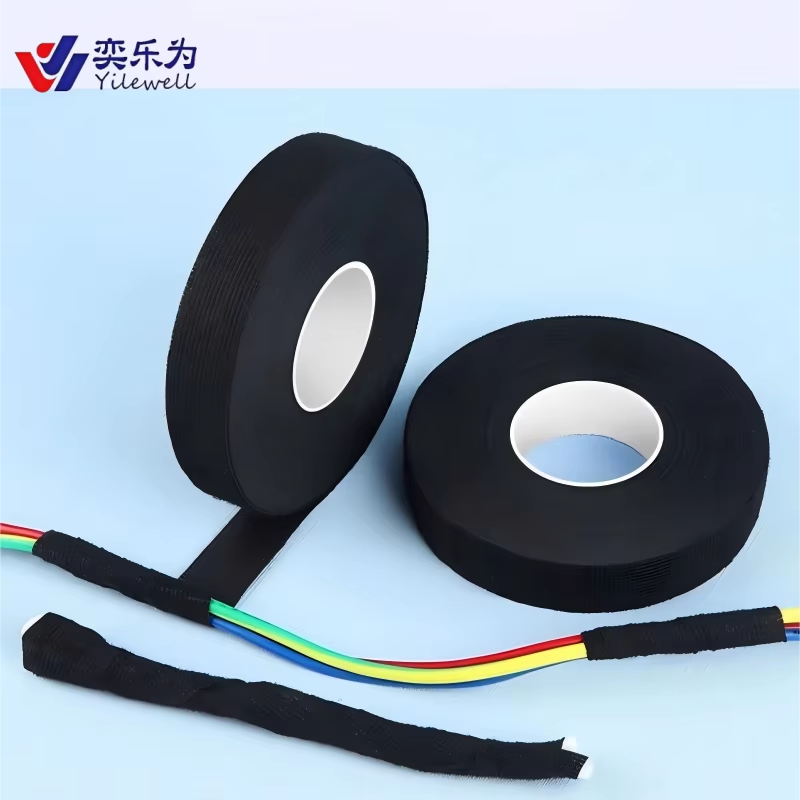
Automotive wiring harness tape serves essential organizational functions that go beyond protection to include efficient space utilization and assembly standardization. By bundling individual wires into organized harnesses, the tape creates neat, compact installations that fit within the tight confines of modern vehicle packaging. This organization reduces the overall volume occupied by wiring and allows for more efficient use of available space.
The bundling capability of automotive wiring harness tape also facilitates proper wire routing that follows predetermined paths through the vehicle structure. Organized harnesses are easier to install correctly during assembly, reducing the risk of routing errors that could cause interference with moving parts or exposure to damage sources. This organizational benefit translates directly into improved assembly quality and reduced installation time.
Manufacturing and Service Efficiency
From a manufacturing perspective, automotive wiring harness tape enables standardized assembly processes that improve quality control and production efficiency. Pre-wrapped harness segments can be prepared offline and installed as complete units, reducing assembly line complexity and improving consistency. The tape's holding power maintains harness integrity during handling and installation, preventing wire displacement that could affect functionality.
Service and maintenance operations benefit significantly from properly applied automotive wiring harness tape systems. Organized, protected harnesses are easier to trace during diagnostic procedures and less likely to suffer damage during service work. When repairs are necessary, the tape protection often contains damage to specific areas, making targeted repairs more feasible than complete harness replacement.
Safety and Reliability Enhancements
Fire Prevention and Containment
Automotive wiring harness tape contributes significantly to vehicle fire safety through multiple mechanisms that prevent ignition and limit fire spread. The tape's insulation properties prevent electrical arcing that could ignite nearby flammable materials, while its barrier function keeps automotive fluids away from electrical components where they could create fire hazards. Quality automotive tape formulations include flame-retardant properties that resist ignition and self-extinguish when heat sources are removed.
In the event of an electrical fault, automotive wiring harness tape helps contain damage and prevent escalation to more serious safety hazards. The tape's thermal properties can provide crucial seconds of protection that allow circuit protection devices to operate before fire develops. This containment capability is particularly important in areas where electrical systems operate near fuel lines, brake fluid, or other flammable automotive fluids.
Electromagnetic Interference Management
Modern vehicles contain numerous electronic systems that must coexist without mutual interference, and automotive wiring harness tape plays a role in electromagnetic compatibility management. Specialized tape formulations can include conductive elements that provide shielding against electromagnetic interference, protecting sensitive circuits from disruption by high-current switching or radio frequency emissions.
The organizational benefits of automotive wiring harness tape also contribute to EMI management by maintaining proper separation between different circuit types. Power wiring, signal wiring, and high-frequency communication lines can be kept at appropriate distances through systematic taping strategies that prevent cross-coupling and interference. This separation is essential for proper operation of advanced driver assistance systems and other safety-critical electronics.
Economic and Lifecycle Value
Maintenance Cost Reduction
The protective properties of automotive wiring harness tape translate directly into reduced maintenance costs over a vehicle's service life. By preventing wire damage, corrosion, and premature failure, the tape eliminates many electrical problems that would otherwise require expensive diagnosis and repair. The cost of quality tape application during initial assembly is minimal compared to the potential cost of electrical system failures in service.
Automotive wiring harness tape also reduces maintenance complexity by keeping electrical systems organized and accessible. Technicians can more quickly identify and resolve problems when wiring is properly bundled and protected, reducing diagnostic time and labor costs. The tape's protection often allows for targeted repairs rather than extensive harness replacement, further controlling maintenance expenses.
Long-term Reliability and Performance
The durability characteristics of automotive wiring harness tape ensure that its protective benefits persist throughout a vehicle's operational life. Unlike temporary solutions that may degrade over time, quality automotive tape maintains its properties under continuous exposure to automotive operating conditions. This longevity provides consistent protection that supports reliable vehicle operation and customer satisfaction.
Investment in proper automotive wiring harness tape application yields returns through improved vehicle reliability ratings and reduced warranty claims. Electrical problems often manifest as intermittent faults that are difficult to diagnose and expensive to resolve. The preventive protection provided by automotive wiring harness tape eliminates many of these potential problems before they can affect vehicle performance or customer experience.
FAQ
How does automotive wiring harness tape differ from regular electrical tape?
Automotive wiring harness tape is specifically engineered to withstand the extreme conditions found in vehicle environments, including temperature fluctuations from -40°F to 200°F, constant vibration, moisture exposure, and chemical contact with automotive fluids. Unlike standard electrical tape, automotive versions feature enhanced adhesive systems that maintain bond strength under thermal cycling, superior abrasion resistance for high-vibration applications, and specialized material formulations that resist degradation from UV exposure and ozone. These automotive-specific properties ensure long-term reliability in demanding vehicle applications where regular electrical tape would fail prematurely.
What thickness of automotive wiring harness tape should be used for different applications?
The appropriate thickness of automotive wiring harness tape depends on the specific protection requirements and installation constraints. For basic wire bundling and light protection, 0.5mm to 0.8mm thickness provides adequate performance while maintaining flexibility for tight routing. Medium-duty applications requiring enhanced abrasion resistance typically use 1.0mm to 1.5mm thickness, offering improved mechanical protection without excessive bulk. Heavy-duty applications in high-vibration or extreme-temperature areas may require 2.0mm or thicker formulations that provide maximum protection against mechanical damage and thermal stress.
Can automotive wiring harness tape be applied over existing wire insulation?
Yes, automotive wiring harness tape is designed to be applied over existing wire insulation and actually provides enhanced protection when used this way. The tape creates an additional barrier layer that protects the original wire insulation from environmental damage, mechanical wear, and chemical exposure. When applying tape over existing insulation, ensure the underlying wires are clean and dry, overlap each wrap by 50% for complete coverage, and maintain consistent tension to create uniform protection. This application method is standard practice in both manufacturing and service applications.
How long does automotive wiring harness tape maintain its protective properties?
Quality automotive wiring harness tape is designed to maintain its protective properties for the operational life of the vehicle, typically 10-15 years or more under normal operating conditions. The tape's longevity depends on factors including environmental exposure, temperature extremes, mechanical stress, and chemical contact. High-quality formulations resist degradation from UV exposure, ozone, and thermal cycling that can cause inferior tapes to become brittle or lose adhesion. Regular inspection during scheduled maintenance can identify any areas where tape protection may need renewal, though properly applied automotive wiring harness tape rarely requires replacement during normal vehicle service life.
Table of Contents
- Enhanced Electrical Protection and Insulation Properties
- Mechanical Protection and Durability Advantages
- Organizational and Assembly Benefits
- Safety and Reliability Enhancements
- Economic and Lifecycle Value
-
FAQ
- How does automotive wiring harness tape differ from regular electrical tape?
- What thickness of automotive wiring harness tape should be used for different applications?
- Can automotive wiring harness tape be applied over existing wire insulation?
- How long does automotive wiring harness tape maintain its protective properties?