 EN
EN


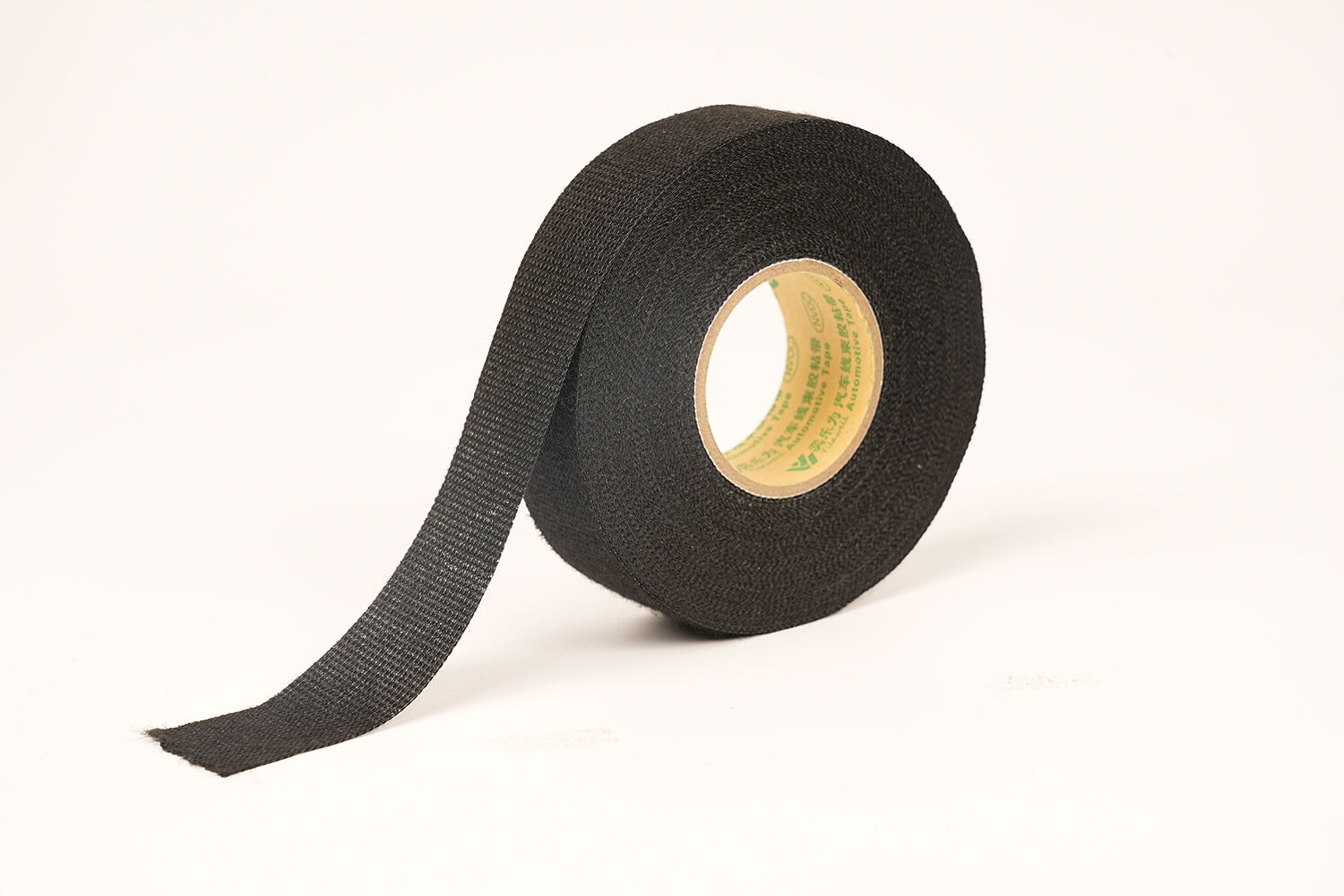
When engineers and procurement specialists evaluate adhesive solutions for high-temperature environments, one critical question consistently surfaces: how does a 150°C heat resistant acrylic tape actually hold up when exposed to sustained heat over time? Unlike short-term thermal spikes that many standard tapes can tolerate briefly, continuous heat exposure is a fundamentally different stress condition — one that demands a product engineered specifically to endure prolonged elevated temperatures without losing structural integrity, adhesion strength, or protective function.
The performance of a 150°C heat resistant acrylic tape under continuous heat exposure is determined by a combination of material chemistry, backing fabric construction, and adhesive formulation. Understanding how each of these elements responds over time is essential for making well-informed application decisions — especially in demanding sectors like automotive wiring harness assembly, industrial cable management, and precision manufacturing environments where heat is not an occasional event but a constant operational reality.
The Science Behind Continuous Heat Resistance in Acrylic Tape
Why Acrylic Adhesive Outperforms Rubber in Sustained Heat Conditions
The fundamental reason why 150°C heat resistant acrylic tape is chosen for high-temperature applications lies in the chemistry of its adhesive system. Acrylic-based adhesives are inherently more thermally stable than rubber-based alternatives because their polymer chains maintain cohesive strength at elevated temperatures rather than softening and flowing. When rubber adhesives are subjected to continuous heat above 80–100°C, they tend to lose viscosity and migrate, leaving residue on surfaces and causing bond failure. Acrylic formulations are designed to resist this degradation mechanism.
Under continuous heat at or near 150°C, the acrylic adhesive within this tape retains its cross-linked polymer structure, which prevents the kind of creep and flow that degrades performance over time. This means that the tape maintains a consistent peel strength and shear resistance even after hours or days of uninterrupted thermal exposure. For applications like automotive cabin wiring harnesses, where the tape must insulate and protect bundled cables against the engine compartment's persistent heat cycles, this chemical stability is not optional — it is a core performance requirement.
The acrylic adhesive also demonstrates superior resistance to oxidation at elevated temperatures. Oxidative degradation is one of the primary failure modes for adhesive systems operating in continuous heat environments, and acrylic chemistry withstands this process far better than natural or synthetic rubber adhesives. Over extended service periods, this translates to a tape that retains its bonding capacity without becoming brittle, crumbly, or chemically altered in ways that compromise the assembly it protects.
The Role of the Cloth Backing in Thermal Performance
The backing material of a 150°C heat resistant acrylic tape is just as critical as its adhesive layer. In quality formulations designed for automotive and industrial use, the backing is typically a woven or non-woven cloth substrate — often glass fiber, polyester, or a reinforced fabric — that provides dimensional stability and mechanical protection at elevated temperatures. Unlike plastic film backings, which can warp, shrink, or delaminate under sustained heat, a cloth backing maintains its shape and structural coherence throughout continuous exposure.
The cloth layer serves multiple functions simultaneously. It provides physical protection against abrasion and mechanical wear, which is especially relevant in wiring harness applications where cables move and vibrate during vehicle operation. It also contributes to the tape's ability to conform to irregular surfaces while maintaining its position under thermal expansion and contraction cycles. When a vehicle's engine bay heats up and cools down repeatedly over its service life, the cloth backing of the tape accommodates these dimensional changes without cracking or losing adhesion.
Additionally, the cloth backing of a high-quality 150°C heat resistant acrylic tape provides a degree of thermal buffering between the heat source and the surfaces it protects. This insulating effect, while not the tape's primary function, contributes to the overall thermal management of the wiring bundle or component it wraps. In continuous heat conditions, this buffering capacity helps prevent the adhesive layer from being subjected to temperatures that exceed its rated maximum, extending the functional lifespan of the tape assembly.
Performance Indicators During Prolonged Heat Exposure
Adhesion Retention Over Time
One of the most direct measures of how a 150°C heat resistant acrylic tape performs under continuous heat exposure is adhesion retention — how much of its original bond strength remains after extended thermal stress. In laboratory testing and real-world application, quality tape of this type is formulated to retain a meaningful percentage of its initial peel adhesion even after 500 to 1,000 hours of continuous exposure at or near its rated temperature. This is a markedly different outcome from standard-grade tapes, which often show dramatic adhesion loss within the first few hours at such temperatures.
Adhesion retention is particularly important in wiring harness applications because the tape must continue to hold bundled cables together and maintain their protective wrapping throughout the vehicle's service intervals. If the tape's bond degrades prematurely, cables can separate, vibrate against each other or surrounding components, and become vulnerable to abrasion damage — creating conditions for electrical faults. The 150°C heat resistant acrylic tape is engineered to prevent this scenario by maintaining cohesive adhesive performance over time.
It is also worth noting that adhesion retention is not just about the tape sticking to itself or to cable surfaces. In many applications, the tape must adhere to rigid plastic conduits, metal brackets, or connector housings — all of which may have different surface energies and thermal expansion coefficients. The acrylic adhesive's formulation is designed to maintain effective bonding to this variety of substrates even after the differential expansion and contraction cycles that continuous heat exposure creates.
Dimensional Stability and Surface Integrity
Another critical performance indicator for 150°C heat resistant acrylic tape under continuous heat is dimensional stability — whether the tape maintains its width, thickness, and surface condition without shrinking, elongating, or developing surface defects. A tape that shrinks longitudinally under heat will loosen around the bundle it wraps, creating gaps in protection. A tape that loses surface integrity — through blistering, delamination, or surface crumbling — no longer provides reliable insulation or abrasion protection.
High-quality 150°C heat resistant acrylic tape demonstrates very low linear shrinkage under continuous thermal exposure precisely because its cloth backing has been selected and processed to resist thermally induced dimensional change. The woven or nonwoven structure of the backing anchors the tape's dimensions and prevents the kind of plastic deformation that would compromise its coverage over a wiring bundle. This stability is especially important in automotive environments where the tape must perform predictably across decades of vehicle operation.
Surface integrity is also maintained through the adhesive-backing interface. In inferior products, prolonged heat exposure can weaken the bond between the adhesive layer and the backing, causing them to separate under mechanical stress. In a properly formulated 150°C heat resistant acrylic tape, this interface is engineered for long-term thermal compatibility, ensuring that the two layers remain unified throughout the tape's service life and that the tape continues to function as a single coherent protective system.
Application Contexts Where Continuous Heat Performance Matters Most
Automotive Wiring Harness Assemblies
The automotive sector is the most prominent application environment for 150°C heat resistant acrylic tape, and specifically for wiring harnesses routed through or near the engine compartment and cabin heat zones. Modern vehicles generate significant and sustained thermal loads in these areas, with temperatures routinely exceeding 120°C near the engine block and turbocharger housings. For wiring harnesses that pass through these regions, the tape wrapping must maintain performance across the full thermal range of the vehicle's operating life — which may span 10 to 15 years and hundreds of thousands of kilometers.
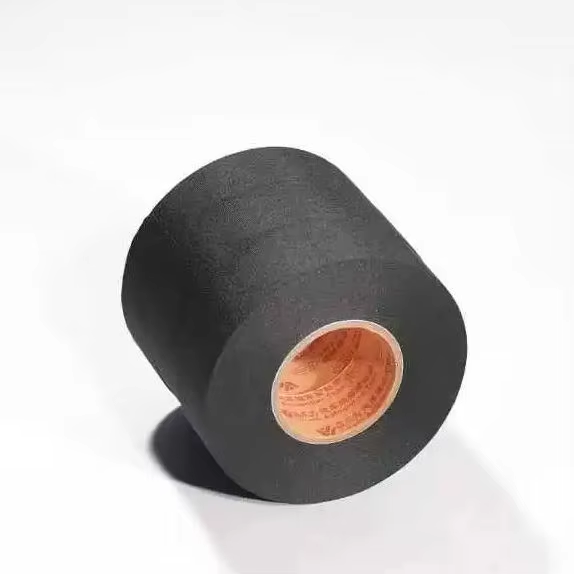
In this context, 150°C heat resistant acrylic tape functions as both a bundling medium and a protective barrier. It holds individual cables and connectors in their designed routing paths, prevents abrasion from neighboring components, and provides a degree of electrical insulation. The continuous heat performance of the tape directly influences the reliability of the entire wiring harness, making tape selection a technically significant decision rather than a commodity procurement choice.
For automotive OEM and Tier 1 suppliers, the consistent performance of 150°C heat resistant acrylic tape under continuous heat exposure is also a quality and compliance issue. Vehicle wiring harness specifications often include thermal aging requirements that tape products must pass before approval for use in production. The tape's ability to retain adhesion, dimensional stability, and surface integrity after standardized continuous heat testing directly determines its eligibility for these demanding supply chains.
Industrial Cable Management and Equipment Insulation
Beyond automotive applications, 150°C heat resistant acrylic tape is also widely used in industrial cable management systems where continuous heat is a constant operating condition. Factories and processing facilities operating furnaces, ovens, high-power motors, and heating elements require cable management solutions that can withstand ambient temperatures well above what standard tapes tolerate. In these environments, the tape is used to bundle and route electrical supply cables, control wiring, and sensor leads that must remain functional despite persistent elevated temperatures.
Industrial applications also frequently involve exposure not just to heat but to combination stressors — heat alongside mechanical vibration, chemical vapors, oils, and intermittent contact with hot surfaces. The 150°C heat resistant acrylic tape's thermal stability provides a foundation for performing acceptably in these multi-stress environments. While the tape is not designed to handle direct immersion in harsh chemicals, its acrylic adhesive system provides considerably better resistance to incidental chemical contact than rubber-based alternatives.
Equipment insulation is another area where this tape category sees regular use. In applications where component surfaces must be partially insulated to prevent heat transfer to adjacent sensitive parts, or where a protective wrap is needed to maintain a component's surface temperature within acceptable bounds, 150°C heat resistant acrylic tape provides a reliable and easy-to-apply solution that performs predictably over the continuous heat conditions present in industrial machinery.
Factors That Influence Long-Term Performance Under Continuous Heat
Temperature Ceiling and Safety Margin Considerations
Understanding the rated temperature of 150°C heat resistant acrylic tape requires some important context. The 150°C rating typically represents the continuous use temperature — the temperature at which the tape is designed to perform reliably over extended periods. This is distinct from a peak or intermittent exposure rating, which might be higher. When an application consistently operates at or near the 150°C ceiling, the tape is being used at the boundary of its design envelope, which means that small variations in actual temperature can have a disproportionate impact on long-term performance.
For this reason, applications that routinely reach temperatures close to 150°C should carefully assess whether a greater safety margin is appropriate. Using the tape in an environment where continuous temperatures remain at 120–130°C rather than at the ceiling of 150°C will generally extend the adhesive's effective service life considerably. The relationship between temperature and adhesive degradation rate is not linear — operating at a meaningful margin below the rated maximum significantly slows the thermal aging process.
Engineers specifying 150°C heat resistant acrylic tape for a given application should therefore consider not just the nominal operating temperature but the peak temperatures that may occur during abnormal operating conditions. The tape's performance reserve — the gap between typical operating conditions and its rated maximum — is a meaningful part of its engineering value in any installation where reliability over time is a priority.
Surface Preparation and Application Quality
The long-term continuous heat performance of 150°C heat resistant acrylic tape is also significantly influenced by how the tape is applied. Even the best-formulated tape will underperform if applied to a surface that is contaminated with oils, dust, moisture, or release agents. Acrylic adhesives require adequate initial contact with a clean, dry substrate to form the bond quality that will sustain performance through continuous heat exposure. Poor initial adhesion creates sites where thermal stress concentrates and degradation accelerates.
Application tension is another factor. When wrapping wiring harnesses or other cylindrical components, applying the tape with consistent, moderate tension ensures full contact between the adhesive and the surface and prevents the formation of air pockets or gaps that can become failure initiation points under heat. Applying the tape with too little tension leaves the wrap loose and susceptible to lifting, while excessive tension can stress the backing material and reduce its dimensional stability over time.
Overlap consistency is also important. In spiral wrapping applications, maintaining a consistent overlap percentage ensures that there are no thin spots in the protective coverage and that the tape forms a continuous, uniform barrier along the bundle. This consistency supports both the thermal and mechanical protection functions of the 150°C heat resistant acrylic tape and contributes to more predictable long-term performance.
FAQ
How long can 150°C heat resistant acrylic tape maintain its adhesion under continuous heat exposure?
When used within its rated temperature range, a properly formulated 150°C heat resistant acrylic tape is designed to retain meaningful adhesion over hundreds to thousands of hours of continuous heat exposure. Exact performance will vary depending on actual operating temperature, substrate type, and application quality. Operating at temperatures below the 150°C ceiling generally extends adhesion retention significantly compared to continuous use at the temperature boundary.
Is 150°C heat resistant acrylic tape suitable for direct contact with hot metal surfaces?
This type of tape can tolerate incidental contact with surfaces at or below its rated temperature, but sustained direct contact with components significantly hotter than 150°C is outside its design intent. For applications where the tape will be in continuous direct contact with metal surfaces that may fluctuate above 150°C, engineering a physical separation or specifying a higher-rated product is advisable to prevent premature adhesive breakdown.
Does 150°C heat resistant acrylic tape perform differently in humid versus dry continuous heat environments?
Acrylic adhesives generally demonstrate good resistance to humidity compared to rubber-based alternatives, making 150°C heat resistant acrylic tape suitable for environments where heat and moisture coexist. However, in extremely high humidity conditions combined with continuous heat, initial surface preparation becomes even more critical to ensure the adhesive achieves adequate initial bond strength before being subjected to thermal and moisture stress simultaneously.
Can this tape be used in automotive engine bays where temperatures fluctuate rather than remain constant?
Yes, 150°C heat resistant acrylic tape is well suited for automotive engine bay environments characterized by repeated heat-up and cool-down cycles rather than static continuous heat. The acrylic adhesive and cloth backing are both designed to accommodate thermal cycling without delaminating or losing cohesion. In fact, the combination of continuous heat capability and cycle resistance makes this tape category a standard choice for automotive wiring harness applications globally.
Table of Contents
- The Science Behind Continuous Heat Resistance in Acrylic Tape
- Performance Indicators During Prolonged Heat Exposure
- Application Contexts Where Continuous Heat Performance Matters Most
- Factors That Influence Long-Term Performance Under Continuous Heat
-
FAQ
- How long can 150°C heat resistant acrylic tape maintain its adhesion under continuous heat exposure?
- Is 150°C heat resistant acrylic tape suitable for direct contact with hot metal surfaces?
- Does 150°C heat resistant acrylic tape perform differently in humid versus dry continuous heat environments?
- Can this tape be used in automotive engine bays where temperatures fluctuate rather than remain constant?