 EN
EN


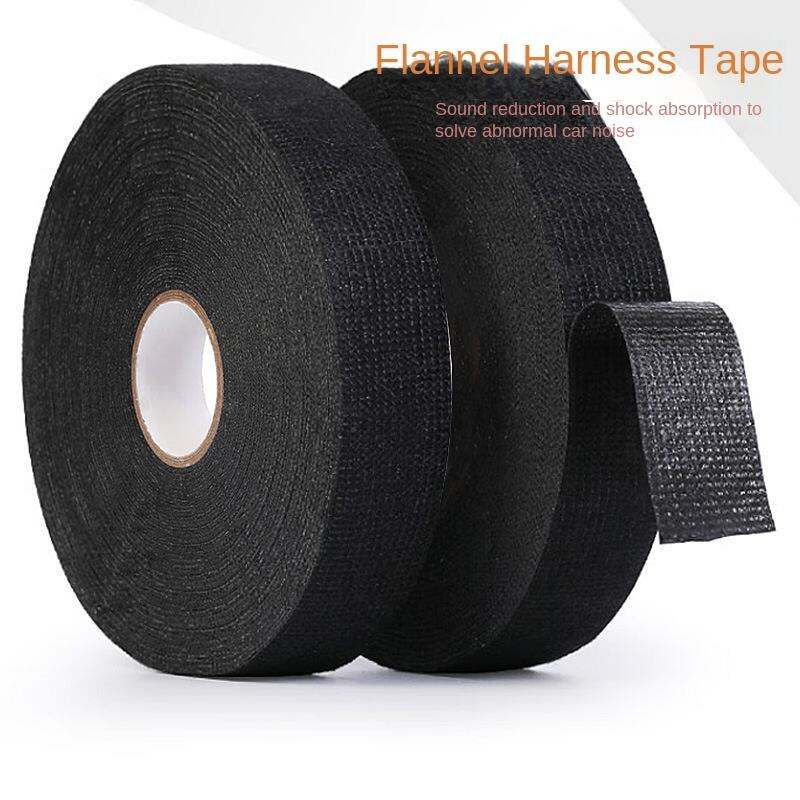
In the world of original equipment manufacturing, material selection is never arbitrary. Every component that goes into an OEM assembly must meet strict performance benchmarks, and adhesive solutions are no exception. When engineers are tasked with specifying tapes for high-temperature environments, one product category consistently rises to the top of the shortlist: 150°C heat resistant acrylic tape. The reasons behind this preference are rooted in engineering logic, thermal science, and the hard-won experience of production floors across the automotive, electronics, and industrial equipment sectors.
The decision to use 150°C heat resistant acrylic tape in OEM projects is driven by a combination of thermal endurance, adhesive reliability, and process compatibility that few alternative tape chemistries can match simultaneously. Unlike rubber-based or silicone adhesive tapes, acrylic-based formulations offer a unique balance of temperature resistance, long-term bond stability, and cost efficiency. For engineers designing wiring harnesses, motor housings, electronic assemblies, and automotive interiors, understanding why this tape performs so well under demanding conditions is essential to making confident, defensible specification decisions.
The Thermal Engineering Case for Acrylic Adhesive Chemistry
How Acrylic Adhesives Behave at Elevated Temperatures
Acrylic adhesives are polymer-based systems that are cross-linked to form exceptionally stable molecular networks. When exposed to sustained heat, many adhesive systems begin to soften, flow, or degrade—a phenomenon that causes bond failure, tape migration, and contamination of sensitive components. The 150°C heat resistant acrylic tape is specifically formulated with high cross-link density polymers that resist thermal creep even when operating continuously near the rated temperature threshold.
At 150°C, rubber-based adhesives typically reach or exceed their glass transition temperatures, causing them to become soft, tacky, and prone to oozing. Acrylic chemistries engineered for this temperature range maintain cohesive strength precisely because their molecular chains are more thermally stable. This is not simply a marginal improvement—it represents a fundamental difference in how the adhesive responds to prolonged heat exposure in a real production environment.
OEM engineers working on automotive wiring harnesses, for example, must account for under-hood temperatures that spike during engine operation and then cycle back down repeatedly over the product's service life. The 150°C heat resistant acrylic tape maintains consistent peel strength, tack, and dimensional stability through these thermal cycles, which is a non-negotiable requirement for harness integrity and long-term reliability.
Why the 150°C Threshold Matters for OEM Specifications
The 150°C rating is not an arbitrary number. It aligns with critical international standards including those from the Society of Automotive Engineers and various IEC norms for electrical insulation materials. Automotive cabin wiring harnesses, for instance, must meet specific heat aging requirements over defined time periods, and 150°C represents a benchmark that many standard and premium applications fall within. Specifying a tape rated for this temperature provides engineers with a meaningful safety margin above typical continuous operating temperatures.
Choosing a tape rated below this threshold introduces risk. A tape rated to only 105°C or 130°C may perform adequately under normal conditions, but intermittent heat spikes from adjacent components—motors, resistors, exhaust routing, or processing ovens—can push localized temperatures significantly higher. The 150°C heat resistant acrylic tape is selected precisely because it eliminates this vulnerability, giving engineers a documented thermal ceiling that covers the realistic worst-case operating envelope of their assemblies.
Beyond temperature tolerance, this rating is also commercially meaningful. Customers, auditors, and quality managers reviewing OEM product specifications expect to see materials that meet or exceed recognized performance standards. Tape with a verified 150°C rating provides the documentation support needed to pass supplier audits and product validation processes without additional justification or workaround testing.
Performance Characteristics That Drive OEM Engineer Preference
Mechanical Strength Under Sustained Thermal Load
The 150°C heat resistant acrylic tape is not selected for thermal tolerance alone. Engineers also value the mechanical performance that acrylic cloth-backed tape constructions offer. The cloth carrier—typically a woven or non-woven fabric substrate—adds tensile strength, tear resistance, and conformability that plain film tapes cannot provide. When used to bundle wiring harnesses, wrap components, or secure insulation in irregular geometries, this combination of a cloth carrier and high-performance acrylic adhesive delivers the handling durability that production line workers and field installers depend on.
Tensile strength matters during the assembly process as well as during service. Wiring harness tape must endure the stress of being pulled, wrapped, and secured by automated machinery or skilled technicians at speed. If the tape tears prematurely or the adhesive lifts from the wire bundle, the entire harness may need to be reworked—an outcome that has direct cost implications on any OEM production line. The 150°C heat resistant acrylic tape typically offers tensile values sufficient to withstand this kind of handling without sacrificing conformability around curves and connectors.
Engineers also appreciate that the acrylic adhesive system tends to exhibit good shear resistance at elevated temperatures. Shear failure—where the adhesive bond slides laterally under load—is a common failure mode for lower-grade tapes when temperatures rise. A properly formulated 150°C heat resistant acrylic tape resists this mechanism, keeping wire bundles tightly wrapped and protecting insulation from abrasion during vibration exposure over the product's operational life.
Aging Stability and Long-Term Reliability in Closed Assemblies
One of the most compelling reasons engineers specify 150°C heat resistant acrylic tape for OEM projects is its outstanding aging stability. Acrylic adhesive chemistry is inherently resistant to UV degradation, oxidation, and plasticizer migration—failure modes that are particularly relevant in closed assemblies where components are sealed and cannot be easily inspected or maintained. Over years of service, rubber-based adhesive tapes may harden, crack, or leave adhesive residue that contaminates nearby components. High-quality acrylic tape constructions resist these degradation pathways far more effectively.
In automotive OEM projects, where product warranties commonly span seven to ten years or more, long-term adhesive stability is not a preference—it is a contractual requirement. Using 150°C heat resistant acrylic tape gives engineers a material that has been validated through accelerated aging protocols to simulate years of real-world thermal and environmental exposure. This validation evidence is a critical deliverable in the OEM supplier qualification process and removes a significant source of uncertainty from the engineering risk register.
Electronic OEM applications present similar demands. Power supply units, motor drives, and control electronics that operate in thermally cycled environments need wiring insulation and component-fixing tape that will not become brittle, lose tack, or outgas harmful compounds over time. The 150°C heat resistant acrylic tape provides stable long-term performance in these environments, which explains why it appears repeatedly on approved materials lists maintained by demanding electronics manufacturers.
Process Compatibility and Manufacturing Integration
Suitability for Automated and Manual Wiring Harness Production
OEM production lines vary widely in terms of automation level and process speed, but the 150°C heat resistant acrylic tape must perform reliably in both environments. Automated harness wrapping machines require tape that unwinds consistently from the roll, maintains stable tension without necking or stretching, and adheres immediately upon contact without requiring prolonged dwell time. The acrylic adhesive systems used in high-quality heat resistant tape are engineered with these process demands in mind, offering controlled unwind force and aggressive initial tack that supports high-speed application.
Manual assembly operations add additional requirements. Technicians wrapping complex harness branches by hand need a tape that is easy to tear or cut cleanly, conforms smoothly to irregular shapes without lifting at edges, and provides enough initial grip to hold position while the next wrap is applied. The cloth-backed construction of 150°C heat resistant acrylic tape contributes directly to these handling qualities, and its balanced adhesive formulation ensures that the tape stays where it is placed from the first contact.
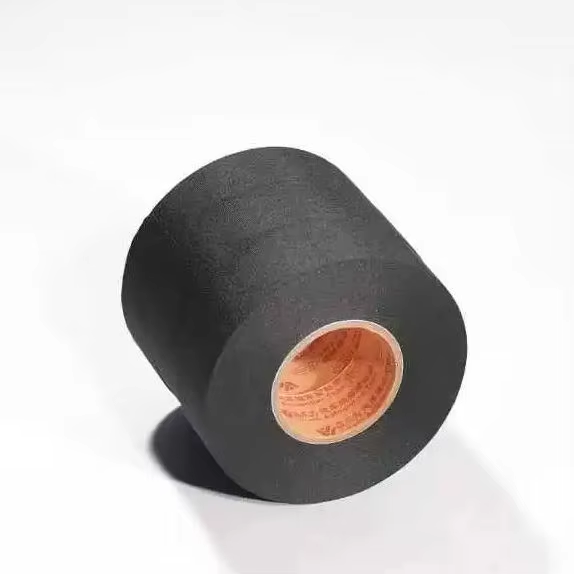
Masking applications in paint, powder coat, or surface treatment processes also benefit from 150°C heat resistant acrylic tape. When used as a process masking tape during high-temperature curing cycles, it must survive the oven without lifting, flagging, or leaving adhesive residue on the substrate. Acrylic adhesive tape rated to 150°C fulfills this requirement reliably, making it a dual-purpose material for manufacturers who need both in-process masking performance and final assembly insulation in the same facility.
Compatibility with Wire and Substrate Materials Used in OEM Assemblies
Modern OEM assemblies use a wide range of wire insulation materials, connector housings, and substrate plastics, each with its own surface energy characteristics. The 150°C heat resistant acrylic tape must adhere reliably to polyolefin wire insulation, nylon connector bodies, aluminum brackets, and powder-coated steel surfaces without requiring primers or surface activation in most cases. Acrylic adhesive chemistries formulated for industrial OEM use are typically designed with a broad adhesion profile that accommodates this substrate diversity.
This broad substrate compatibility is an important practical advantage. Engineers who must specify a single tape for an entire wiring harness assembly that touches dozens of different materials cannot afford to select a tape that requires individual adhesion testing on each substrate. The 150°C heat resistant acrylic tape simplifies the specification process by offering reliable performance across the material matrix typically encountered in automotive and industrial OEM production.
Chemical resistance is another aspect of compatibility that engineers factor into their decisions. Wiring harnesses in automotive environments are exposed to lubricants, fuels, cleaning agents, and hydraulic fluids over the vehicle's service life. Acrylic adhesives generally offer better chemical resistance than natural rubber adhesives, which can swell or soften when exposed to hydrocarbons and other organic solvents. Specifying 150°C heat resistant acrylic tape therefore provides an additional layer of protection against adhesive bond failure caused by chemical exposure in service.
Quality Documentation and Supplier Requirements in OEM Procurement
How Engineers Validate Tape Performance Claims
In OEM procurement, the claim that a tape is rated to 150°C must be backed by credible test data. Engineers reviewing tape specifications will look for evidence of thermal aging tests conducted according to recognized standards, peel adhesion measurements at both room temperature and elevated temperature, and documentation of holding power under sustained thermal load. The 150°C heat resistant acrylic tape that appears on approved vendor lists has typically passed rigorous validation through these standardized test protocols, and suppliers are expected to provide test reports on request.
Quality management systems at OEM-level manufacturers typically require incoming material inspection criteria for adhesive tape, including dimensional tolerances, adhesion minimums, and thermal performance benchmarks. A well-documented 150°C heat resistant acrylic tape from a qualified supplier arrives with the necessary certificates of conformance, material safety data sheets, and test reports to satisfy these incoming quality control requirements without holding up production.
Engineers who have experienced the consequences of using under-specified or falsely rated tape—harness rework, field warranty claims, or production line stoppages—understand viscerally why documentation and traceability matter. Choosing a 150°C heat resistant acrylic tape that comes with verifiable test data and a responsive supplier quality system is as important as the material's physical performance characteristics. Both dimensions contribute to the product's value in an OEM context.
Cost-Performance Considerations in Long-Running OEM Programs
OEM programs often run for several years, and the material costs of adhesive tape—while modest per unit—become significant at the scale of millions of harnesses or assemblies. Engineers must balance the higher per-roll cost of a properly rated 150°C heat resistant acrylic tape against the downstream costs of using cheaper alternatives that may fail in service. When warranty return costs, rework expenses, and supply chain disruption risks are factored in, the value equation for properly specified tape becomes clear.
The 150°C heat resistant acrylic tape also tends to offer process economy benefits that offset some of its material cost premium. Because it adheres reliably on the first application and does not require rework or re-taping, it reduces labor costs on the assembly line. Its consistent unwind characteristics reduce machine downtime caused by tape breaks or jam events. And its long shelf life—acrylic adhesives are notably more shelf-stable than rubber-based alternatives—reduces the risk of incoming material rejection due to adhesive aging in warehouse storage.
For purchasing teams working alongside engineers on OEM projects, these total cost of ownership arguments are persuasive. Specifying 150°C heat resistant acrylic tape is not simply a technical preference—it is a business decision that protects margins, reduces risk, and supports the long-term relationship between the OEM assembler and their end customer.
FAQ
What makes acrylic adhesive better than rubber adhesive for high-temperature OEM applications?
Acrylic adhesives have a more thermally stable polymer structure than natural or synthetic rubber adhesives, which means they maintain cohesive strength, resist creep, and avoid adhesive transfer at sustained elevated temperatures. In OEM applications that require continuous performance at or near 150°C, this chemical stability is the primary reason engineers favor 150°C heat resistant acrylic tape over rubber-based alternatives.
Can 150°C heat resistant acrylic tape be used in both masking and final assembly roles on the same production line?
Yes. One of the practical advantages of 150°C heat resistant acrylic tape is its dual-use capability. It performs reliably as a masking tape during high-temperature curing or coating processes and also serves as a final assembly insulation and bundling tape for wiring harnesses and electrical components. This versatility reduces the number of tape SKUs a facility needs to manage and simplifies purchasing and inventory processes.
How does an engineer verify that a tape is genuinely rated to 150°C and not just marketed with that label?
Engineers should request test reports from suppliers that show adhesion performance measured before and after thermal aging at 150°C according to recognized standards such as ASTM or IEC test methods. Reputable suppliers of 150°C heat resistant acrylic tape will provide certificates of conformance and specific peel strength values at temperature, giving procurement and quality teams the data needed to validate the rating claim through their own incoming inspection procedures if required.
Is 150°C heat resistant acrylic tape suitable for use with sensitive electronic components where outgassing is a concern?
High-quality formulations of 150°C heat resistant acrylic tape are generally designed with low outgassing characteristics, making them more compatible with sensitive electronics than many rubber or solvent-based adhesive tapes. However, engineers specifying tape for ultra-sensitive optoelectronic or precision sensor applications should request specific outgassing test data from their supplier to confirm suitability for their particular component environment.
Table of Contents
- The Thermal Engineering Case for Acrylic Adhesive Chemistry
- Performance Characteristics That Drive OEM Engineer Preference
- Process Compatibility and Manufacturing Integration
- Quality Documentation and Supplier Requirements in OEM Procurement
-
FAQ
- What makes acrylic adhesive better than rubber adhesive for high-temperature OEM applications?
- Can 150°C heat resistant acrylic tape be used in both masking and final assembly roles on the same production line?
- How does an engineer verify that a tape is genuinely rated to 150°C and not just marketed with that label?
- Is 150°C heat resistant acrylic tape suitable for use with sensitive electronic components where outgassing is a concern?