 EN
EN


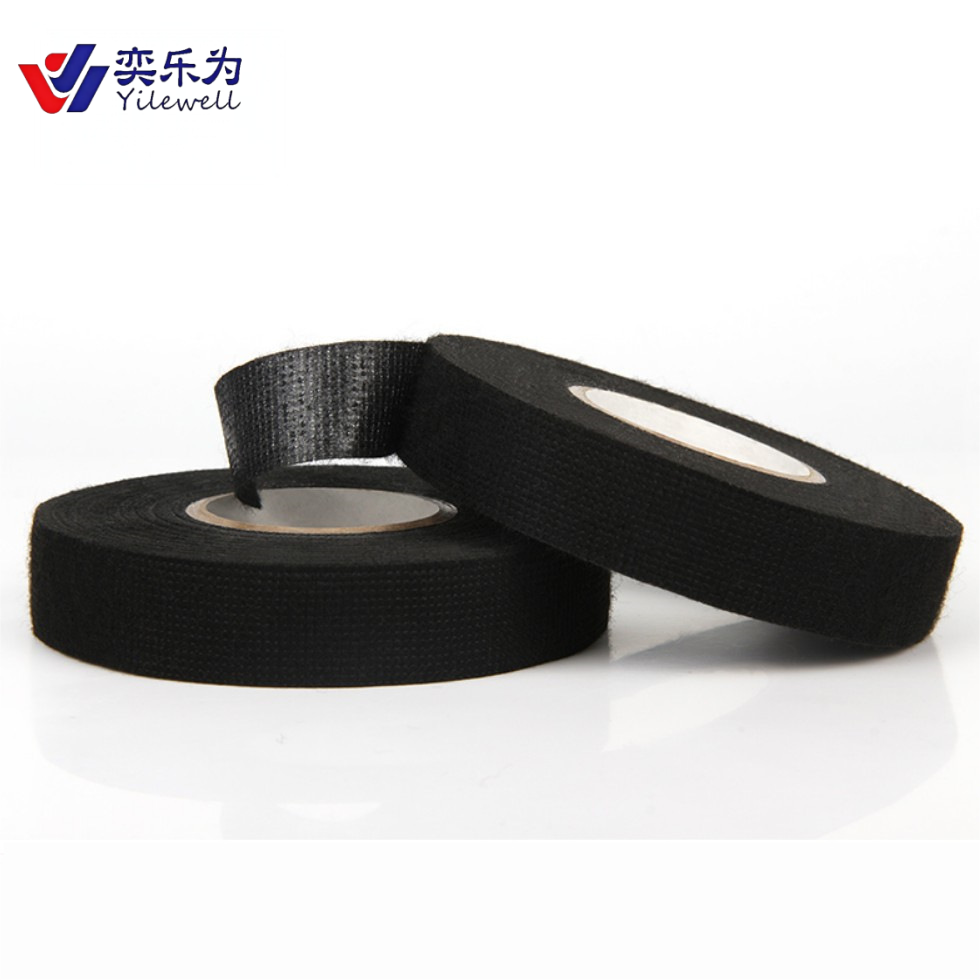
When procurement teams and engineers evaluate bonding solutions, the choice between cloth adhesive tape industrial and standard adhesive tapes is rarely straightforward. Each category is engineered for a different performance envelope, and selecting the wrong type can lead to premature failure, rework costs, or safety risks on the production floor. Understanding how cloth adhesive tape industrial is fundamentally different from standard options is essential for making confident, cost-effective purchasing decisions in any B2B environment.
Standard adhesive tapes are widely available and suitable for light-duty tasks such as packaging, labeling, and temporary surface protection. By contrast, cloth adhesive tape industrial is purpose-built for demanding environments where heat, mechanical stress, and long-term adhesion are non-negotiable requirements. This article breaks down the key structural, performance, and application differences so that buyers can accurately assess where cloth adhesive tape industrial delivers superior value.
Structural Differences That Define Performance
Backing Material and Construction
The most immediate distinction between cloth adhesive tape industrial and a standard tape lies in the backing material. Standard tapes typically use polypropylene film, paper, or PVC as their base. These materials are thin, lightweight, and inexpensive, but they offer limited tensile strength and virtually no resistance to tearing under lateral force. Cloth adhesive tape industrial uses a woven or non-woven fabric carrier, which fundamentally changes the mechanical behavior of the tape. The fabric backing allows cloth adhesive tape industrial to be torn cleanly by hand without scissors, a practical feature valued in fast-paced assembly lines where efficiency matters.
The weave structure in cloth adhesive tape industrial also provides conformability, enabling it to wrap around curved surfaces, pipes, and irregular geometries without lifting or bubbling. Standard film-based tapes struggle to conform to such surfaces, which is why cloth adhesive tape industrial is far more reliable in complex bundling and harnessing applications. The fabric carrier also contributes to the overall thickness and damping properties, which adds a layer of abrasion resistance that standard tapes simply cannot match.
Adhesive Chemistry and Bonding Strength
Standard adhesive tapes commonly rely on rubber-based or low-grade acrylic adhesives that perform adequately at room temperature on smooth, clean surfaces. Cloth adhesive tape industrial, particularly the pressure-sensitive heat-resistant acrylic variant, uses a high-performance acrylic adhesive system designed to maintain bond integrity under thermal cycling, humidity, and chemical exposure. This is a critical distinction for automotive, electrical, and HVAC applications where temperatures can fluctuate significantly. The acrylic adhesive in cloth adhesive tape industrial resists aging, which means the bond does not degrade into a sticky residue over time, a common failure mode seen with rubber-based standard tapes.
Performance Benchmarks in Industrial Conditions
Heat Resistance and Thermal Stability
One of the defining advantages of cloth adhesive tape industrial over standard tapes is its thermal performance. Standard adhesive tapes are rated for ambient conditions and typically fail above 60 to 80 degrees Celsius, losing adhesion and deforming. Cloth adhesive tape industrial with a heat-resistant acrylic adhesive system can withstand significantly higher temperatures, making it suitable for use in engine compartments, industrial ovens, and high-output electrical assemblies. The fabric carrier in cloth adhesive tape industrial also serves as a thermal buffer, slowing heat transfer to the bonded substrate. This means that cloth adhesive tape industrial is not just an adhesive solution but also a thermal management layer in demanding installations.
For operations involving paint masking, powder coating, or surface finishing where heat cycles are part of the process, cloth adhesive tape industrial delivers clean removal without leaving residue even after exposure to elevated temperatures. Standard masking tapes used in the same context frequently leave adhesive deposits that require solvent cleaning, adding labor and downtime. The heat resistance of cloth adhesive tape industrial directly translates to process efficiency and surface quality.
Mechanical Durability and Load Handling
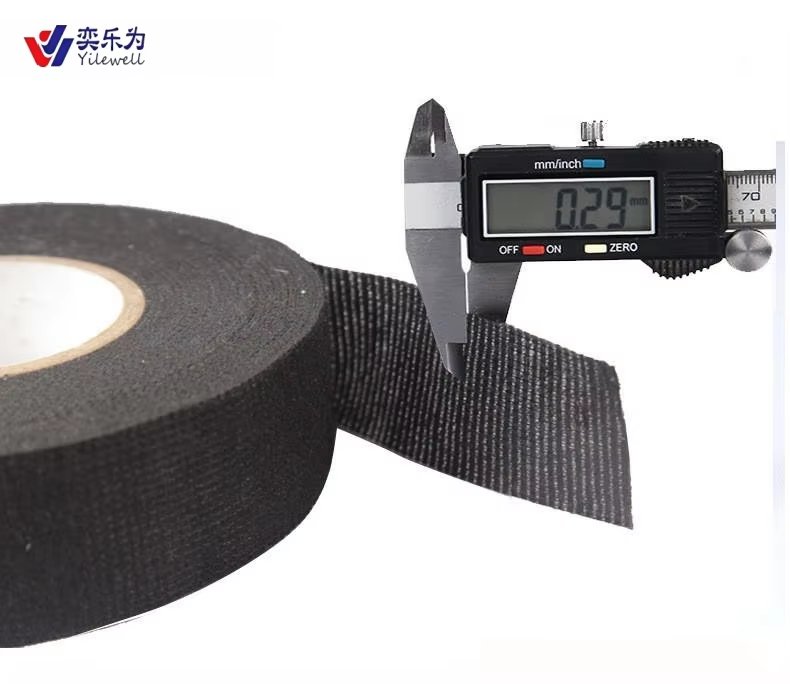
Tensile strength and elongation behavior set cloth adhesive tape industrial apart from standard alternatives in mechanical applications. Standard tapes stretch or snap under moderate pulling force, making them unreliable for wire harnessing, heavy cable bundling, or structural holding tasks. Cloth adhesive tape industrial exhibits high tensile strength across both the warp and weft directions of its fabric backing, distributing load evenly and resisting failure under sustained tension. This makes cloth adhesive tape industrial a trusted choice for automotive wire loom wrapping, furniture manufacturing, and heavy-duty industrial packaging where bond failure is not acceptable.
Application Scenarios Where Cloth Adhesive Tape Industrial Excels
Automotive and Electrical Assembly
In automotive manufacturing, cloth adhesive tape industrial is used to wrap wire harnesses, bundle cables, and protect looms from vibration and abrasion. The combination of fabric conformability, acrylic adhesive durability, and heat resistance makes cloth adhesive tape industrial uniquely suited for the under-hood environment where standard tapes would degrade rapidly. Electrical assembly plants rely on cloth adhesive tape industrial to secure insulation wraps and provide strain relief at connection points. The hand-tearable property of cloth adhesive tape industrial significantly reduces assembly cycle time compared to alternatives requiring cutting tools.
Construction, HVAC, and Surface Masking
In construction and HVAC, cloth adhesive tape industrial is applied for duct sealing, insulation fastening, and surface protection during renovation work. The pressure-sensitive nature of cloth adhesive tape industrial means no additional tools or primers are needed for application. Surface masking during industrial painting or coating processes is another strong use case, where cloth adhesive tape industrial provides clean, defined lines and survives the curing temperatures that standard masking tapes cannot. These scenarios illustrate why cloth adhesive tape industrial is a versatile, process-critical solution across multiple industries.
FAQ
Can cloth adhesive tape industrial be used outdoors?
Yes, cloth adhesive tape industrial with acrylic adhesive is suitable for outdoor use due to its resistance to UV exposure, moisture, and temperature variation. However, the specific grade of cloth adhesive tape industrial should be confirmed against the expected environmental conditions before deployment.
How does cloth adhesive tape industrial differ from duct tape?
While duct tape is a type of cloth tape, cloth adhesive tape industrial refers specifically to engineered tapes with defined thermal performance, pressure-sensitive acrylic adhesives, and consistent dimensional specifications. Standard duct tape uses rubber adhesive and is not designed for heat-resistant or precision masking applications where cloth adhesive tape industrial excels.
What cycle length should I specify when ordering cloth adhesive tape industrial?
The appropriate roll length of cloth adhesive tape industrial depends on application volume and operational workflow. A 25-meter cycle length is a common specification for cloth adhesive tape industrial used in automotive and electrical assembly, balancing roll changes with uninterrupted workflow efficiency. Consulting with the supplier about custom lengths is recommended for high-volume industrial operations.