 EN
EN


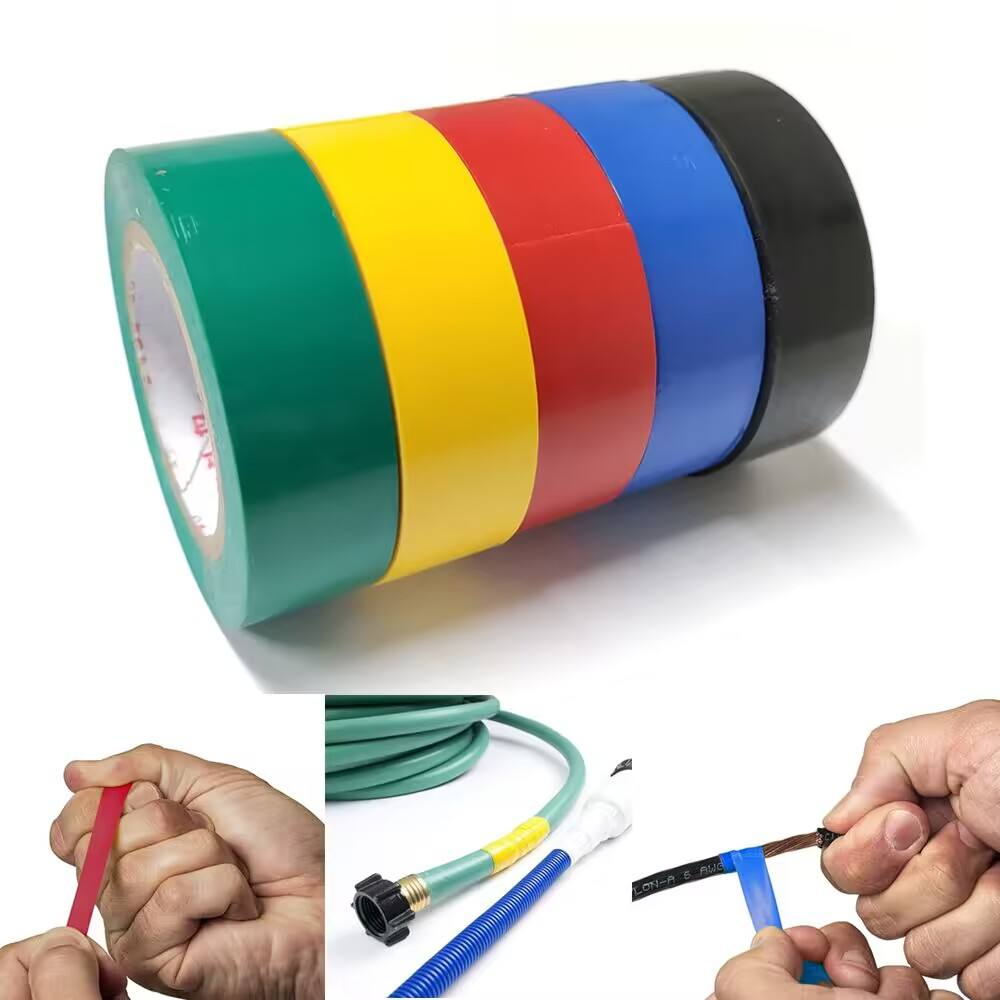
In manufacturing environments where temperatures soar, electrical systems demand insulation, and surfaces must endure relentless mechanical stress, the materials used to hold everything together are not chosen casually. heat resistant tape has earned a permanent place on the production floor, inside electrical panels, along assembly lines, and within high-voltage systems precisely because it performs where ordinary adhesive solutions fail. Manufacturers across industries have come to rely on it not as a convenience product but as a mission-critical component that directly affects safety, uptime, and product quality.
The trust that manufacturers place in heat resistant tape is not built on marketing claims. It is built on consistent, measurable performance under conditions that would degrade or destroy conventional tapes within hours. Understanding why this trust exists requires a close look at what heat resistant tape actually delivers in real industrial settings, how it integrates into critical workflows, and what properties make it the preferred choice when the stakes are high. This article explores those reasons in depth, drawing on the practical realities of industrial application rather than abstract specifications.
The Demands of Critical Manufacturing Environments
Why Ordinary Tape Cannot Survive Industrial Conditions
Standard adhesive tapes are engineered for general-purpose use. They perform adequately at room temperature, under modest mechanical loads, and in dry conditions. But manufacturing environments are rarely moderate. Electrical assembly lines generate sustained heat. Automotive production involves exposure to oils, solvents, and temperature cycling. Electronics manufacturing requires materials that maintain dimensional stability and adhesion through reflow soldering and wave soldering processes. In all of these contexts, ordinary tape loses adhesion, deforms, or releases toxic fumes long before the job is done.
Heat resistant tape is engineered specifically to address these failure modes. Its backing material, adhesive chemistry, and thickness are all selected to maintain integrity at elevated temperatures. A well-specified heat resistant tape retains its bond strength, resists deformation, and continues to provide electrical insulation even when ambient temperatures climb well beyond what standard PVC or paper tapes can tolerate. This is not a marginal improvement — it is a categorical difference in performance that manufacturers recognize immediately when they switch from general-purpose solutions.
The consequences of tape failure in a critical application are not trivial. A tape that releases during a soldering process can expose conductors, cause short circuits, or contaminate solder joints. A tape that deforms under heat in an automotive harness can allow wires to chafe against metal edges. These are not hypothetical risks — they are documented failure modes that drive procurement teams to specify heat resistant tape as a non-negotiable material standard.
The Range of Temperatures That Industrial Processes Demand
Different manufacturing processes impose very different thermal loads on the materials used within them. Electrical insulation in motor windings may involve continuous exposure to temperatures in the range of 105°C to 180°C. Masking applications in powder coating ovens require tapes to survive short-duration exposures above 200°C. Wave soldering and reflow soldering in electronics manufacturing expose tapes to peak temperatures that can exceed 260°C for brief intervals. Heat resistant tape is available in formulations that address each of these ranges, giving manufacturers the ability to match the tape specification precisely to the process requirement.
This temperature range versatility is one of the core reasons manufacturers trust heat resistant tape across such a wide variety of applications. Rather than sourcing multiple specialized materials for different thermal zones within a single facility, procurement teams can often standardize on a well-chosen heat resistant tape that covers the majority of their thermal exposure scenarios. This simplifies inventory management, reduces the risk of misapplication, and ensures that technicians on the floor are working with a material they understand and trust.
Electrical Safety and High-Voltage Insulation Requirements
Why Insulation Integrity Cannot Be Compromised
In electrical manufacturing and maintenance, the insulation provided by heat resistant tape is not a secondary function — it is the primary reason the tape exists in many applications. High-voltage systems, motor windings, transformer coils, and bus bar assemblies all require insulation materials that maintain their dielectric properties under thermal stress. When insulation degrades, the consequences range from equipment damage to catastrophic electrical failure and fire. Manufacturers working in these environments cannot afford to use insulation materials that have not been validated for the thermal and electrical conditions they will face.
Heat resistant tape designed for high-voltage insulation is formulated to maintain its dielectric strength even as temperatures rise. The PVC or other backing material resists softening and cracking, the adhesive does not migrate or carbonize, and the overall tape construction continues to provide a reliable barrier between energized conductors and surrounding materials. This combination of thermal stability and electrical performance is what makes heat resistant tape the standard choice for insulation tasks in electrical manufacturing, panel building, and field maintenance of high-voltage equipment.
Manufacturers also value the waterproof characteristics that quality heat resistant tape provides. In environments where condensation, coolant splash, or humidity is present alongside elevated temperatures, a tape that resists moisture ingress provides an additional layer of protection for electrical connections and insulated surfaces. The combination of heat resistance, high-voltage insulation capability, and waterproof performance in a single product reduces the complexity of specifying and applying protective materials in mixed-environment applications.
Thickness, Conformability, and Coverage in Electrical Applications
The physical dimensions of heat resistant tape matter significantly in electrical applications. A tape with a thickness of approximately 0.11mm, for example, provides a balance between conformability and insulation build. Thin tapes conform more easily to irregular surfaces, wrap cleanly around wire bundles, and allow multiple layers to be applied without creating excessive bulk in tight spaces. This is particularly important in motor windings and transformer coils where space is constrained and the tape must follow complex geometries without lifting, bridging, or creating air gaps that could compromise insulation integrity.
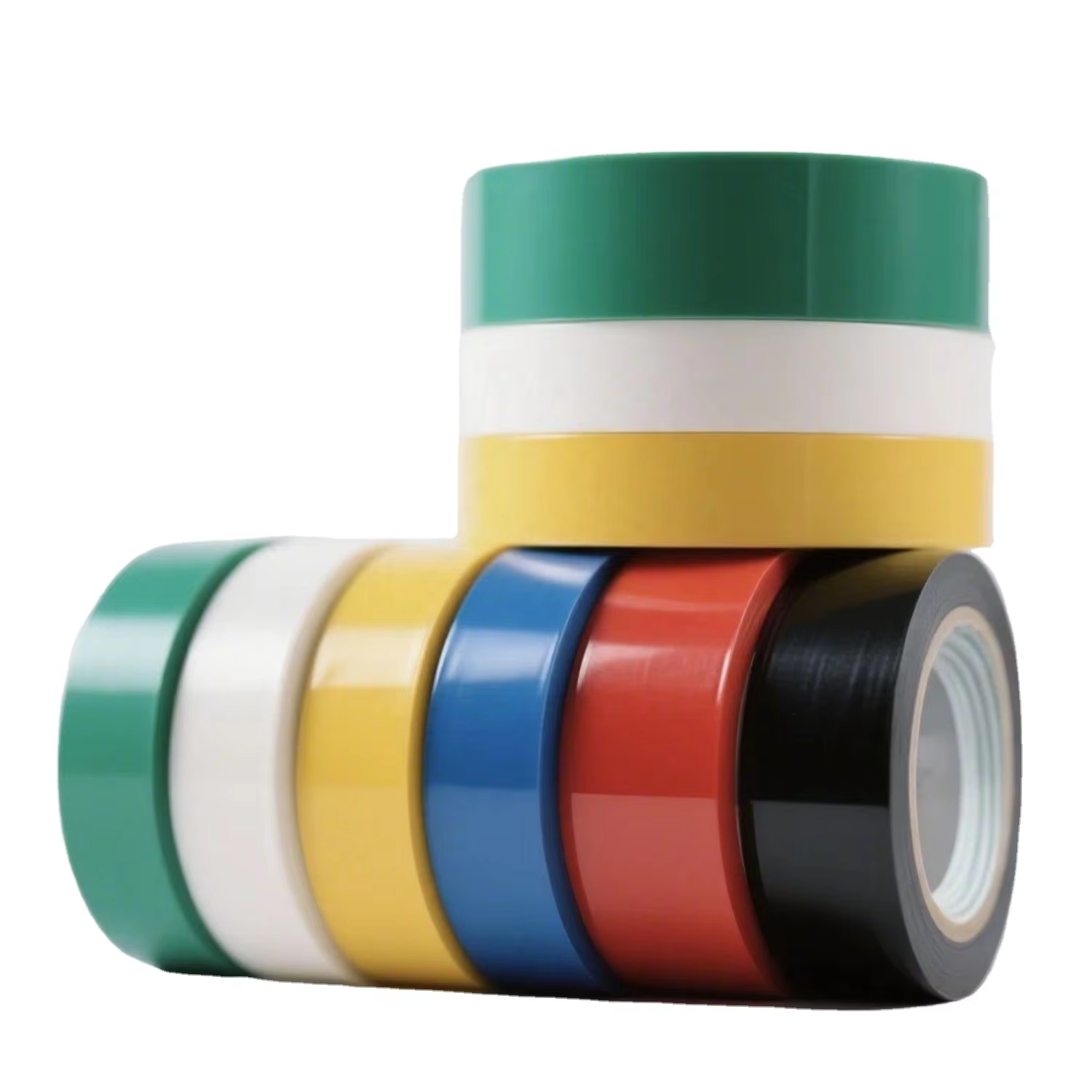
Conformability also affects the consistency of coverage. A tape that conforms well to the surface it is applied to leaves no voids or lifted edges where moisture, contaminants, or mechanical stress could initiate insulation failure. Manufacturers who have experienced insulation failures caused by poorly conforming tapes understand the value of a heat resistant tape that lays flat, adheres uniformly, and maintains that contact through thermal cycling. The reliability of coverage is as important as the raw dielectric strength of the material.
Waterproof Performance and Environmental Durability
How Moisture Resistance Extends the Value of Heat Resistant Tape
Manufacturing environments are rarely clean and dry. Coolant systems, wash stations, humidity from outdoor air, and condensation from temperature differentials all introduce moisture into spaces where electrical and mechanical components must remain protected. Heat resistant tape that also provides waterproof performance addresses this reality directly. The tape acts as a barrier that prevents moisture from reaching insulated conductors, bonded surfaces, or sealed joints, even when the environment is wet and the temperature is elevated simultaneously.
This dual capability — heat resistance combined with waterproof performance — is particularly valuable in automotive manufacturing, where wire harnesses must survive engine bay temperatures, road spray, and wash cycles throughout the vehicle's service life. It is equally important in industrial machinery where coolant lines run adjacent to electrical systems, and in outdoor electrical installations where rain and heat coexist. Manufacturers who specify heat resistant tape for these applications are not simply choosing a tape that handles heat — they are choosing a material that handles the full environmental profile of the application.
The waterproof characteristic of quality heat resistant tape also contributes to long-term adhesion reliability. Moisture is one of the primary causes of adhesive failure in tape applications. When water penetrates beneath a tape's edge, it can undermine the adhesive bond progressively, eventually causing the tape to lift and expose the surface it was protecting. A waterproof heat resistant tape resists this failure mode, maintaining its bond and its protective function over extended service periods even in humid or wet conditions.
Chemical Resistance and Surface Compatibility
Beyond moisture, manufacturing environments expose tapes to oils, solvents, cleaning agents, and process chemicals. Heat resistant tape formulated for industrial use is typically resistant to the common chemicals encountered in manufacturing settings, including cutting fluids, hydraulic oils, and mild cleaning solvents. This chemical resistance ensures that the tape does not swell, soften, or lose adhesion when it contacts these substances, which is a real risk with tapes that have not been formulated for industrial chemical exposure.
Surface compatibility is another dimension of durability that manufacturers consider carefully. Heat resistant tape must adhere reliably to a range of substrates including copper conductors, aluminum bus bars, steel enclosures, plastic housings, and composite materials. The adhesive system used in a quality heat resistant tape is selected to provide strong initial tack and long-term adhesion across this range of surfaces, without requiring primers or surface treatments that would add complexity and cost to the application process.
Operational Efficiency and Process Integration
How Heat Resistant Tape Supports Production Speed and Consistency
Manufacturers do not only evaluate materials on their technical performance — they also evaluate how easily those materials integrate into production workflows. Heat resistant tape scores well on this dimension because it is applied manually or with dispensing equipment using the same techniques as any other pressure-sensitive tape. There is no curing time, no mixing, no special equipment, and no waiting period before the taped assembly can move to the next production stage. This simplicity of application translates directly into production speed and process consistency.
In high-volume manufacturing, the time required to apply insulation or masking materials at each workstation accumulates quickly. A heat resistant tape that applies cleanly, conforms without adjustment, and holds immediately allows operators to work at pace without rework or quality checks at the taping stage. This operational efficiency is a significant part of why manufacturers standardize on heat resistant tape rather than exploring alternative insulation or masking methods that might offer marginal performance advantages but introduce process complexity.
Consistency is equally important. When a manufacturing process relies on a specific tape to provide insulation, masking, or bundling, the performance of that tape must be predictable from roll to roll and batch to batch. Manufacturers who have established heat resistant tape as a process standard have done so because the material delivers consistent performance that their quality systems can rely on. Variability in tape performance introduces variability in product quality, which is unacceptable in critical applications.
Cost-Effectiveness Over the Full Application Lifecycle
The initial cost of heat resistant tape is typically higher than that of general-purpose tape, and manufacturers are aware of this. However, procurement decisions in industrial settings are rarely made on unit price alone. The relevant comparison is the total cost of using a material across its full application lifecycle, including the cost of failures, rework, warranty claims, and downtime that result from using an inadequate material. When evaluated on this basis, heat resistant tape consistently demonstrates strong cost-effectiveness in critical applications.
A single insulation failure in a high-voltage assembly can require complete disassembly, re-insulation, and re-testing of the affected unit. The labor cost of this rework, combined with the cost of scrapped materials and the delay to production schedules, far exceeds the cost difference between a quality heat resistant tape and a cheaper alternative. Manufacturers who have experienced these failure costs understand the economics clearly and specify heat resistant tape as the cost-effective choice, not the premium choice.
Long service life also contributes to cost-effectiveness. Heat resistant tape that maintains its performance over years of service in a motor winding or electrical panel does not need to be replaced during routine maintenance intervals. This reduces maintenance labor, eliminates the risk of introducing new failure points during re-taping operations, and contributes to the overall reliability of the equipment in which it is installed. The durability of heat resistant tape is not just a technical specification — it is a direct contributor to the total cost of ownership of the systems it protects.
FAQ
What makes heat resistant tape suitable for high-voltage insulation applications?
Heat resistant tape designed for high-voltage insulation maintains its dielectric strength at elevated temperatures, resisting softening, cracking, and adhesive migration that would compromise the insulation barrier. The combination of a thermally stable backing material, a reliable adhesive system, and consistent thickness ensures that the tape continues to separate energized conductors from surrounding materials even under sustained thermal and electrical stress. These properties make heat resistant tape the standard choice for motor windings, transformer coils, bus bar insulation, and panel wiring in high-voltage environments.
Can heat resistant tape be used in both masking and insulation applications?
Yes, heat resistant tape is used in both masking and insulation applications, though the specific formulation and temperature rating required may differ between these uses. For masking in powder coating or paint baking ovens, the tape must survive short-duration high-temperature exposure and release cleanly without leaving adhesive residue. For electrical insulation, the tape must maintain dielectric properties and adhesion over long-term continuous exposure to elevated temperatures. Selecting the correct heat resistant tape specification for each application type ensures reliable performance in both contexts.
How does the waterproof property of heat resistant tape benefit electrical assemblies?
The waterproof characteristic of heat resistant tape prevents moisture from penetrating beneath the tape and reaching insulated conductors or bonded surfaces. In environments where condensation, humidity, or direct water exposure occurs alongside elevated temperatures, this moisture barrier protects against insulation degradation, corrosion of conductors, and adhesive failure caused by water ingress. For automotive wire harnesses, outdoor electrical installations, and industrial machinery with coolant systems, the combination of heat resistance and waterproof performance in a single tape material simplifies specification and ensures comprehensive protection.
Why do manufacturers prefer heat resistant tape over alternative insulation methods in production settings?
Manufacturers prefer heat resistant tape in production settings primarily because of its ease of application, process consistency, and reliable performance without the complexity of curing, mixing, or special equipment. Unlike liquid insulation coatings or heat-shrink materials that require additional process steps, heat resistant tape applies immediately with standard techniques and holds without a waiting period. This simplicity supports production speed and reduces the risk of process variability. Combined with its proven thermal, electrical, and environmental performance, heat resistant tape offers a practical and cost-effective insulation solution that integrates smoothly into high-volume manufacturing workflows.
Table of Contents
- The Demands of Critical Manufacturing Environments
- Electrical Safety and High-Voltage Insulation Requirements
- Waterproof Performance and Environmental Durability
- Operational Efficiency and Process Integration
-
FAQ
- What makes heat resistant tape suitable for high-voltage insulation applications?
- Can heat resistant tape be used in both masking and insulation applications?
- How does the waterproof property of heat resistant tape benefit electrical assemblies?
- Why do manufacturers prefer heat resistant tape over alternative insulation methods in production settings?